2016 का India सोचिए। आपको नया headphone चाहिए। सामने सिर्फ दो options हैं।
पहला — Sony या JBL का box उठाओ, ₹3,000 से ₹5,000 निकालो। Quality अच्छी है, brand भरोसेमंद है, पर जेब हल्की हो जाएगी।
दूसरा — local market या online से ₹200-300 का “China वाला” earphone उठा लो। सस्ता है, पर तीन हफ्ते में wire कट जाएगी, sound quality भी average, और warranty का तो नाम मत लो।
बीच में कुछ था ही नहीं। ना कोई brand जो affordable हो, ना कोई product जो दिखने में अच्छा लगे।
इसी खाली जगह में दो दोस्त — Aman Gupta और Sameer Mehta — अपनी जमा पूंजी के ₹30 लाख लेके उतरे। नाम रखा boAt.
आज, वही boAt India का No.1 audio और wearable brand है। इसकी IPO subscription इसी महीने (August 2026) खुलने वाली है, और company की valuation ₹14,000 करोड़ से ऊपर आंकी जा रही है।
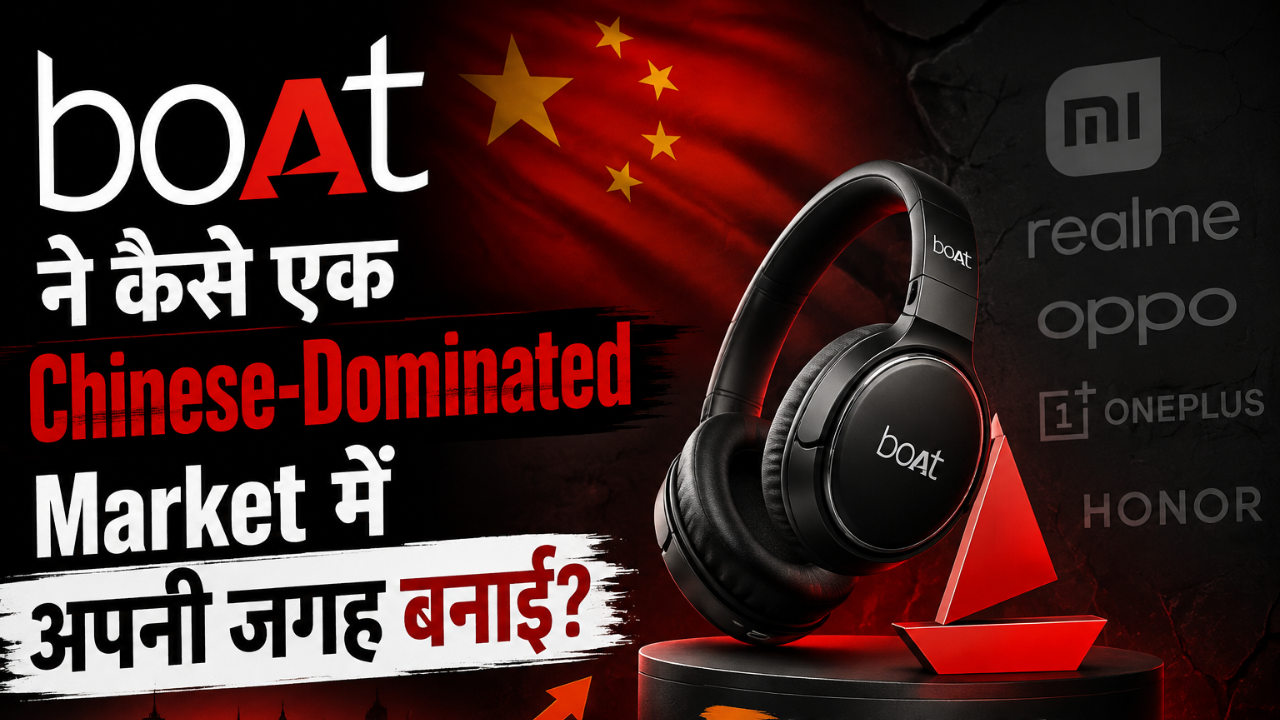
सवाल ये है — जब market सस्ती Chinese products से भरा पड़ा था, और Sony-JBL जैसे global giants पहले से अपनी जगह बना चुके थे, तो एक bootstrapped Indian startup ने अपनी जगह कैसे निकाली? चलिए पूरी case study समझते हैं — positioning से pricing तक, और influencer marketing से Make in India तक।
Chinese-Dominated Market का असली चेहरा (2016 से पहले)
boAt की strategy समझने से पहले, उस वक्त के market को समझना ज़रूरी है।
उस दौर में Indian audio accessories market दो साफ हिस्सों में बंटा हुआ था:
- Premium end: Sony, JBL (Harman International), Skullcandy, Sennheiser जैसे multinational brands। Quality solid, पर price ₹3,000 से ₹5,000+ तक। ये brands ज़्यादातर offline electronics retail chains के through बिकते थे — heavy markup के साथ।
- Bottom end: बिना नाम के Chinese imports। Local बाज़ार, सड़क के stalls, और शुरू-शुरू में e-commerce पर भी ये products छाए हुए थे। Price कम, पर ना कोई brand story, ना quality assurance, ना after-sales service।
जो सबसे बड़ा demand वाला segment था — sub-₹1,000 का range, जहां India के young consumers खरीदारी करते थे — वहां सिर्फ यही Chinese-dominated products थे। Aman Gupta ने खुद interviews में बताया है कि उन्होंने देखा — India में अच्छी quality के products महंगे international brands के पास थे, और सस्ती चीज़ें सिर्फ China से आ रही थी, quality के साथ compromise करके।
यानी gap साफ था: ₹300 का junk earphone और ₹5,000 का global import — इनके बीच में कुछ भी नहीं।
boAt ने इसी white space को अपना business opportunity बनाया।
Also Read: Miracle या Masterpiece? RAM NAAM से लिखी Ramcharitmanas की अनसुनी कहानी

boAt की Positioning Strategy: Gadget नहीं, Fashion Accessory
यहां से boAt की असली चाल शुरू होती है। उन्होंने product को “cheap alternative” की तरह position नहीं किया — क्योंकि उस game में हमेशा कोई और brand और सस्ता निकल आता।
इसके बजाय, boAt ने अपने audio products को lifestyle और fashion accessory की तरह पेश किया। Company खुद कहती है कि वो consumer electronics नहीं, lifestyle accessories बेचते हैं।
कैसे किया ये:
- Tagline रखा “Plug into Nirvana” — यानी perfect music से मिलने वाली शांति और immersion का वादा।
- Design language बदला। Bold colors, geometric patterns, playful typography — जब बाकी brands boring black-and-silver designs बेच रहे थे, boAt ने ऐसी चीज़ें बनाई जो Instagram पर अच्छी लगे।
- 2019 में Lakme Fashion Week के ramp पर models ने boAt accessories पहने — audio product को fashion statement बना दिया।
- पूरा brand persona “music is life” के around बनाया, जो India के millennials और Gen Z को directly target करता था।
ये positioning move critical थी। जब आप किसी चीज़ को “affordable fashion” बना देते हो, तो consumer price की तुलना सिर्फ competitor products से नहीं करता — वो उसे अपनी identity का हिस्सा मान लेता है। इसी वजह से boAt Chinese-dominated market के “सिर्फ सस्ता” narrative से बाहर निकल पाया।
Also Read: Manoj Dey: The YouTube Success Story That Inspires Millions
Influencer Marketing: Founder खुद बना सबसे बड़ा Ambassador
boAt की marketing strategy का दूसरा pillar था — सही लोगों के साथ दिखना।
Cricket का support: 2020 में boAt ने एक साथ 6 IPL teams के साथ partnership की और Shikhar Dhawan, Hardik Pandya, KL Rahul, और Shreyas Iyer जैसे players को brand के साथ जोड़ा। IPL India का सबसे बड़ा cultural moment है — और boAt ने उसे अपनी brand visibility बढ़ाने के लिए पूरा use किया।
Bollywood का glamour: Ranveer Singh, Jacqueline Fernandez, Kartik Aaryan, Rashmika Mandanna, और Kiara Advani जैसे actors को endorsement के लिए लाया गया — हर एक का अपना fanbase, जो boAt के लिए नए audience segments खोल रहा था।
Digital-first approach: Instagram Reels, YouTube Shorts, और micro-influencers के through boAt ने college festivals और music events तक अपनी presence बनाई — जहां Gen Z असल में time बिताता है, वहीं brand पहुंच गया।
Founder-led branding: शायद सबसे smart move ये रही कि co-founder Aman Gupta खुद एक public figure बन गए — खासकर Shark Tank India में judge बनने के बाद। जब founder खुद entrepreneurship, hustle, और brand-building की कहानी सुनाता है, तो वो सिर्फ एक CEO नहीं रहता — वो खुद एक trusted voice बन जाता है। ये organic marketing थी जिसके लिए कोई extra budget नहीं चाहिए था।
इन सब layers को मिलाकर boAt ने वो चीज़ achieve की जो Chinese-dominated unbranded market कभी नहीं कर सका — trust और aspiration। लोग सिर्फ product नहीं खरीद रहे थे, वो एक identity खरीद रहे थे।
Pricing Strategy: JBL और Sony को उनके ही Game में मात
अब बात करते हैं सबसे practical हिस्से की — pricing।
| Factor | Sony / JBL (Premium) | Chinese Unbranded | boAt |
|---|---|---|---|
| Earphone price | ₹3,000 – ₹4,000+ | ₹200 – ₹500 | ₹1,000 – ₹1,500 |
| Design | Functional, generic | Copy-paste, no identity | Bold, fashion-forward |
| Warranty | हां, strong | नहीं | हां, India-based support |
| Brand story | Global legacy brand | कोई नहीं | Youth lifestyle brand |
| Distribution | Retail-heavy | Local market / grey channels | D2C + Amazon, Flipkart, Myntra |
एक decent boAt earphone का price ₹1,000-1,500 होता है, जब equivalent Sony product ₹3,000-4,000 में आता है। Sound quality में Sony शायद थोड़ा better हो, पर ज़्यादातर users को वो फर्क notice ही नहीं होता — जबकि price में double या triple का gap साफ दिखता है।
boAt ने इस gap को capture करने के लिए D2C, digital-first model अपनाया। Company ने Amazon, Flipkart, Myntra, और Paytm जैसे major online marketplaces के साथ जल्दी partnership की — traditional retail के heavy markups को bypass करके।
यहां interesting बात ये है कि जब boAt ने market share लेना शुरू किया, तो JBL और Sony ने भी अपनी budget lines launch की — competition करने के लिए। पर वो strategy ज़्यादा कामयाब नहीं हुई। क्यों? क्योंकि इनकी पूरी brand identity “premium” पर बनी थी। जब premium brand discount देता है, तो वो desperate लगता है, strategic नहीं। boAt के पास ये baggage नहीं थी — affordability हमेशा से उनकी identity का core हिस्सा थी, कोई compromise नहीं।

“Made in China” से “Make in India” तक: एक Risk जो Strength बन गई
एक interesting twist भी है इस कहानी में।
boAt के शुरुआती products China में manufacture होते थे — जैसे industry के ज़्यादातर players के products होते हैं। 2020 में जब India-China border tension बढ़ा और देश में Chinese products के boycott का माहौल बना, तो boAt के लिए ये एक genuine risk बन गया। Company पर सवाल उठे कि जब वो खुद “Chinese-dominated market” को challenge कर रही है, तो उनके अपने products भी China में ही बन रहे हैं।
boAt ने इस challenge को smartly handle किया। Company ने धीरे-धीरे अपना manufacturing base India की तरफ shift करना शुरू किया — जिससे China पर dependency कम हुई, और “Atmanirbhar Bharat” के sentiment के साथ brand का alignment भी बन गया। एक vulnerability जो brand को नुकसान पहुंचा सकती थी, उसे एक positioning opportunity में बदल दिया गया।
ये lesson business के लिए बहुत काम का है — जब कोई risk सामने आए, तो सवाल ये नहीं कि “कैसे छुपाएं,” बल्कि “कैसे इसे अपनी story का हिस्सा बनाएं।”
Also Read: Sartaz Sir: From Dreams of a Cab Driver to Becoming a Top English Teacher in India
Numbers जो कहानी सुनाते हैं
Strategy अच्छी लगती है, पर numbers ही असली proof देते हैं।
- 2021 में, Counterpoint Research के मुताबिक, boAt दुनिया का दूसरा सबसे बड़ा wearable brand बन गया था — Apple के बाद। उस साल के पहले तीन महीनों में, India में बिके top 5 audio wearable models में से 3 boAt के थे।
- FY2025 में, boAt की parent company Imagine Marketing का revenue ₹3,097.81 करोड़ रहा (FY2024 के ₹3,135.35 करोड़ के मुकाबले थोड़ा कम), पर company ने ₹61.08 करोड़ का profit कमाया — जबकि FY2024 में ₹79.68 करोड़ का loss हुआ था। यानी boAt profitable बन गया।
- 2025 में overall wearables market में boAt अपनी No.1 position पर बना रहा, market share 27.6% (2024) से बढ़कर 29.2% हो गया।
- Company का IPO SEBI से September 2025 में approve हो चुका है। Subscription इसी महीने यानी August 2026 के तीसरे हफ्ते खुलने वाली है, और listing October 2026 की पहली हफ्ते में expected है — NSE और BSE दोनों पर। Valuation का अंदाज़ा $1.4-1.6 billion (लगभग ₹14,060 करोड़) लगाया जा रहा है। Warburg Pincus, Malabar Investments, और Fireside Ventures जैसे investors company में पैसे लगा चुके हैं।
एक bootstrapped ₹30 लाख से शुरू हुई company का सफर public market तक पहुंचना — अपने आप में एक बड़ा statement है।
नया Challenge: जब छोटे भाई भी वही Playbook सीख लें
Honesty से बात करें, तो boAt की journey सिर्फ success story नहीं है — अभी भी competition तेज़ हो रही है।
2025 के smartwatch category में, Noise ने market lead कर लिया है — 26.6% share के साथ, जबकि boAt दूसरे number पर है 14.1% share के साथ, और Fire-Boltt तीसरे number पर 9.7% के साथ। Interesting बात ये है कि Noise और Fire-Boltt जैसे brands ने भी वही playbook use किया जो boAt ने बनाया था — affordable pricing, bold design, और influencer-heavy marketing।
यानी जो strategy कभी Chinese-dominated market को challenge करने के लिए बनाई गई थी, अब वही strategy नए domestic competitors boAt के against use कर रहे हैं। Overall wearables market में boAt अभी भी No.1 है (29.2% share), पर ये reminder है कि कोई भी positioning advantage permanent नहीं होता — उसे continuously defend करना पड़ता है।
आपके लिए 5 Business Takeaways
अगर आप अपना business या brand बना रहे हैं, तो boAt की कहानी से ये सीखें:
- White space ढूंढो, red ocean में मत कूदो। boAt ने Sony से सस्ता या Chinese products से महंगा बनने की कोशिश नहीं की — उन्होंने बीच का एक नया category बनाया।
- Product को सिर्फ function नहीं, identity बनाओ। जब customer आपकी चीज़ को अपनी personality का हिस्सा मान ले, तो price comparison matter करना बंद हो जाता है।
- Distribution channel खुद control करो। D2C model ने boAt को traditional retail के markup से बचाया और direct customer relationship बनाई।
- Founder का personal brand भी business asset है। Aman Gupta की visibility ने boAt की marketing cost कम की और trust बढ़ाया।
- Risk को छुपाओ मत, उसे reposition करो। China manufacturing वाली controversy को boAt ने “Make in India” journey में बदल दिया — defensive होने के बजाय proactive रहा।
FAQs
Q1: boAt के products China में बनते हैं क्या? शुरुआत में boAt के ज़्यादातर products China में manufacture होते थे, जैसे industry के कई players के होते हैं। 2020 के बाद company ने अपना manufacturing base धीरे-धीरे India की तरफ shift करना शुरू किया, ताकि China पर dependency कम हो।
Q2: boAt इतना सस्ता product कैसे बेच पाता है जबकि quality भी ठीक रहती है? boAt D2C और digital-first distribution model use करता है — Amazon, Flipkart, Myntra जैसे platforms के through direct बिक्री, जिससे traditional retail का heavy markup बच जाता है। इसी saved margin से वो product को affordable रख पाते हैं, बिना quality को बहुत compromise किए।
Q3: boAt का सबसे बड़ा competitor कौन है? Overall wearables market में boAt अभी भी No.1 है। पर smartwatch category में Noise और Fire-Boltt जैसे domestic brands strong competition दे रहे हैं — Noise तो इस category में lead भी कर रहा है।
Q4: boAt का IPO कब आ रहा है? boAt की parent company Imagine Marketing का IPO SEBI से approved है। Subscription August 2026 के तीसरे हफ्ते खुलने की उम्मीद है, और listing October 2026 की शुरुआत में NSE-BSE पर हो सकती है।
Q5: boAt की success से नए entrepreneurs क्या सीख सकते हैं? सबसे बड़ा lesson ये है कि competition में जीतने के लिए सबसे सस्ता या सबसे premium होना ज़रूरी नहीं — एक clear positioning के साथ नया white space ढूंढना ज़्यादा powerful होता है।